
Chapter 11- Coastal Hazards

 This week the focus is Coastal Hazards, for Greece the main coastal hazard is erosion and sea levels rising. Erosion is when "geological processes of earth materials is taken or removed from one place to another such as soil or rocks by wind, water, or ice".  One third which is 28.6% of the Hellenic coastline is being affected by erosion and the rate is 0.3-0.5 meters a year, the Aegan coast is  prone to erosion mainly when sea level rises more than 3.5mm per year. This is caused by climate change and deforestation in Greece, and due to having dams or river channelization(helps with river flow to make it easier to navigate and controls flooding) there has not been as much sediment supply which helps shape landscapes, ecosystems, and coastal landforms in Greece. 

Greece has put in place hard engineering structures in order to protect the coast from eroding, those being seawalls, groins, breakwaters (protects against tides), and rock armoring as well. Around 15% of the coastline that is suffering from erosion is being protected. Other protections set in place are taking care of the beaches so there is a loss of beaches in Greece, sediment recycling, and stabilization of the dunes.
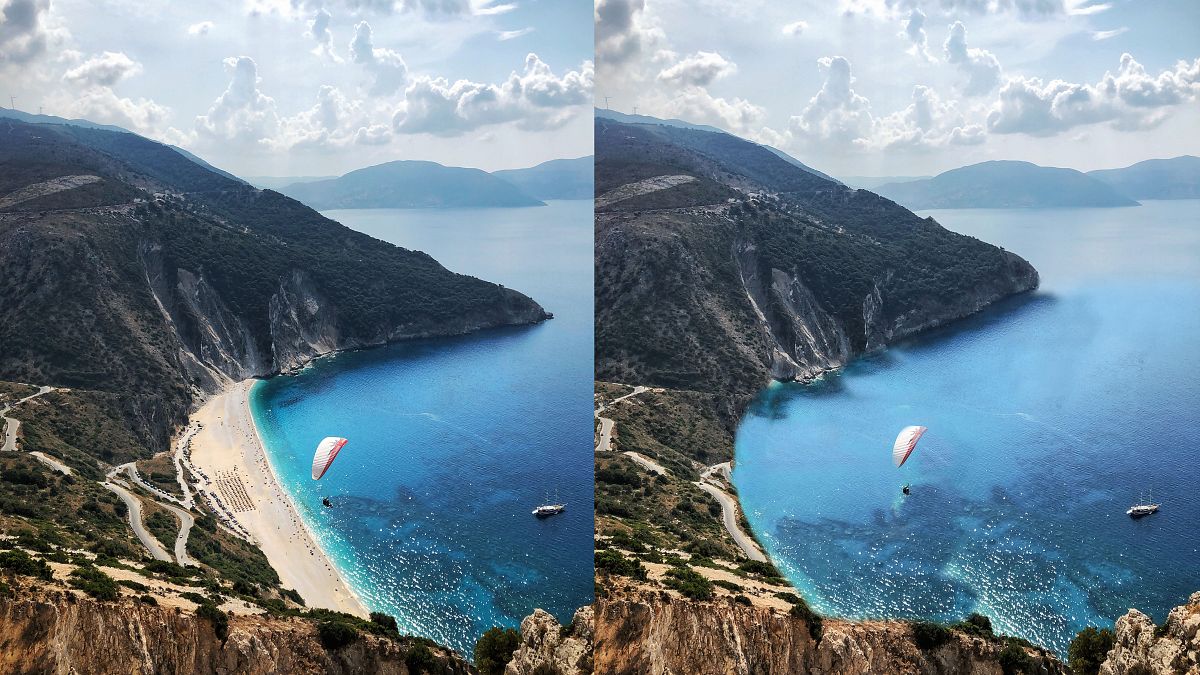


(Before and After of Greece Coast in 2022)
Sources:
https://www.climatechangepost.com/countries/greece/coastal-erosion/#:~:text=Nearly%20one%2Dthird%20(28.6%25),of%2020%2D30%20years).
https://www.euronews.com/travel/2022/03/07/before-and-after-these-incredible-photos-show-how-greece-s-coast-is-disappearing
https://www.e-education.psu.edu/earth107/node/969
https://www.britannica.com/science/erosion-geology


Comments

  1. I really enjoyed your post this week about Coastal Hazards. Your post was well written out and I liked how you explained what erosion is, Spain also has erosion problems and rising sea-levels. Another thing I liked is how you included the statics and their outcomes. Great job!

    ReplyDelete
  2. This Weeks post about coastal hazard was really interesting as I got to learn more about how this disaster affects Greece. Great job

    ReplyDelete

Post a Comment

Popular posts from this blog

Introduction-Week 1 Material

     The country I decided on was Greece! I have always found it interesting and wish to travel there one day. Greece has many different islands and 80% of Greece is made up of mountains, one could discover so much in different islands or islets (a small island). I can't wait to read more about Greece and it's History. Hazards are when an earthquake, tornado, windstorms, etc. may occur and it can be a threat. A disaster includes a hazard but it is in a specific area and declared a state of emergency and could possibly need international help. With that being said, a catastrophe involves a hazard that really effects everything around it. It does a lot of damage to human life, wild life, and property which takes a big amount of money and time to recover.  Resources:  Introduction-Ch1 https://www.trafalgar.com/real-word/facts-greece/

Week 5- Volcanos

  Greece is made up of islands that has 35 volcanoes but only five are active, based on the Global Volcanism Program database there are four Holocene volcanoes. Two of those volcanoes have been active since 1800 CE but none have been active since 1960 CE and zero have currently erupted.  Greece also has seven pleistocene volcanoes.  Although there has not been an eruption in Greece in a very long time, there has been increased activity in the past ten years. They have systems set in play to get monitoring volcanic activity in order to stay updated and give warnings.  They have a system called  Geo- spatial warning systems Nisyros volcano(Greece). This case study started on December 31,2002. It has been proven when monitoring measurable changes in geophysical and geochemical parameters gives early warnings. The systems job is to have correlations, stimulations, and modeling in a graphically accurate way using real time monitored data in 4D. Mode. Those results wi...